The Laugh on the Pont des Arts
The Laugh on the Pont des Arts is the pivotal event in Albert Camus's The Fall that shatters Jean-Baptiste Clamence's complacent self-image and initiates his psychological and moral collapse. While crossing the Pont des Arts in Paris on a fine autumn evening, Clamence hears a mysterious, hearty laugh behind him that he cannot attribute to any visible source. This inexplicable laughter, which he later realizes has never ceased echoing through the world, triggers a profound crisis of identity, forcing him to confront the duplicity of his virtues, his hidden desire for domination, and his ultimate failure to respond to a drowning woman years earlier.
The Evening of the Laugh
On a fine autumn evening, still warm in town and already damp over the Seine, Clamence was walking up the quays of the Left Bank toward the Pont des Arts. The river was gleaming between the stalls of the secondhand booksellers, and the sky was filling with stars. He was happy, enjoying the return of silence, the evening's mildness, and the emptiness of Paris. The day had been good: he had helped a blind man, obtained a reduced sentence for a client, received a cordial handclasp, performed a few liberalities, and in the afternoon delivered a brilliant improvisation with friends on the hardheartedness of the governing class and the hypocrisy of leaders. On the deserted bridge, facing the statue of the Vert-Galant, he felt a vast feeling of power and completion rising within him. He straightened up and was about to light a cigarette of satisfaction when, at that very moment, a laugh burst out behind him. Taken by surprise, he suddenly wheeled around; there was no one there. He stepped to the railing; no barge or boat. He turned back toward the island and again heard the laughter behind him, a little farther off as if it were going downstream. The sound of the laughter was decreasing, but he could still hear it distinctly behind him, come from nowhere unless from the water. At the same time he was aware of the rapid beating of his heart. There was nothing mysterious about that laugh; it was a good, hearty, almost friendly laugh, which re-established the proper proportions. Soon he heard nothing more. He returned to the quays, went up the rue Dauphine, bought cigarettes he didn't need. He was dazed and had trouble breathing. That evening he rang up a friend, who wasn't at home. Later, he heard laughter under his windows, but it was only some youths saying good night. He went into the bathroom to drink a glass of water. His reflection was smiling in the mirror, but it seemed to him that his smile was double.
The Aftermath and the Unraveling of Self
In the days following the laugh, Clamence thought about it for a few days, then forgot it. Once in a great while, he seemed to hear it within him. But he ceased to walk along the Paris quays; when he rode along them in a car or bus, a sort of silence would descend on him. He was waiting, he believed, but he would cross the Seine, nothing would happen, and he would breathe again. He also had some health problems: a dejection, a sort of difficulty in recovering his good spirits. Doctors gave him stimulants, and he was alternately stimulated and depressed. Life became less easy for him; it seemed to him that he was half unlearning what he had never learned and yet knew so well—how to live. He thinks it was probably then that everything began. Gradually, his memory returned, and he discovered the fundamental duplicity of the human being. He realized that modesty helped him to shine, humility to conquer, and virtue to oppress. He used to wage war by peaceful means and eventually achieve, through disinterested means, everything he desired. The surface of all his virtues had a less imposing reverse side. He excelled above all in scorn; the very people he helped most often were the most scorned. Courteously, with a solidarity charged with emotion, he used to spit daily in the face of all the blind. The laugh had alerted him to the hidden smile he now perceived on the faces of everyone he encountered. The circle of which he was the center broke, and they lined up in a row as on the judge's bench. The whole universe then began to laugh at him.
The Connection to the Drowning Woman
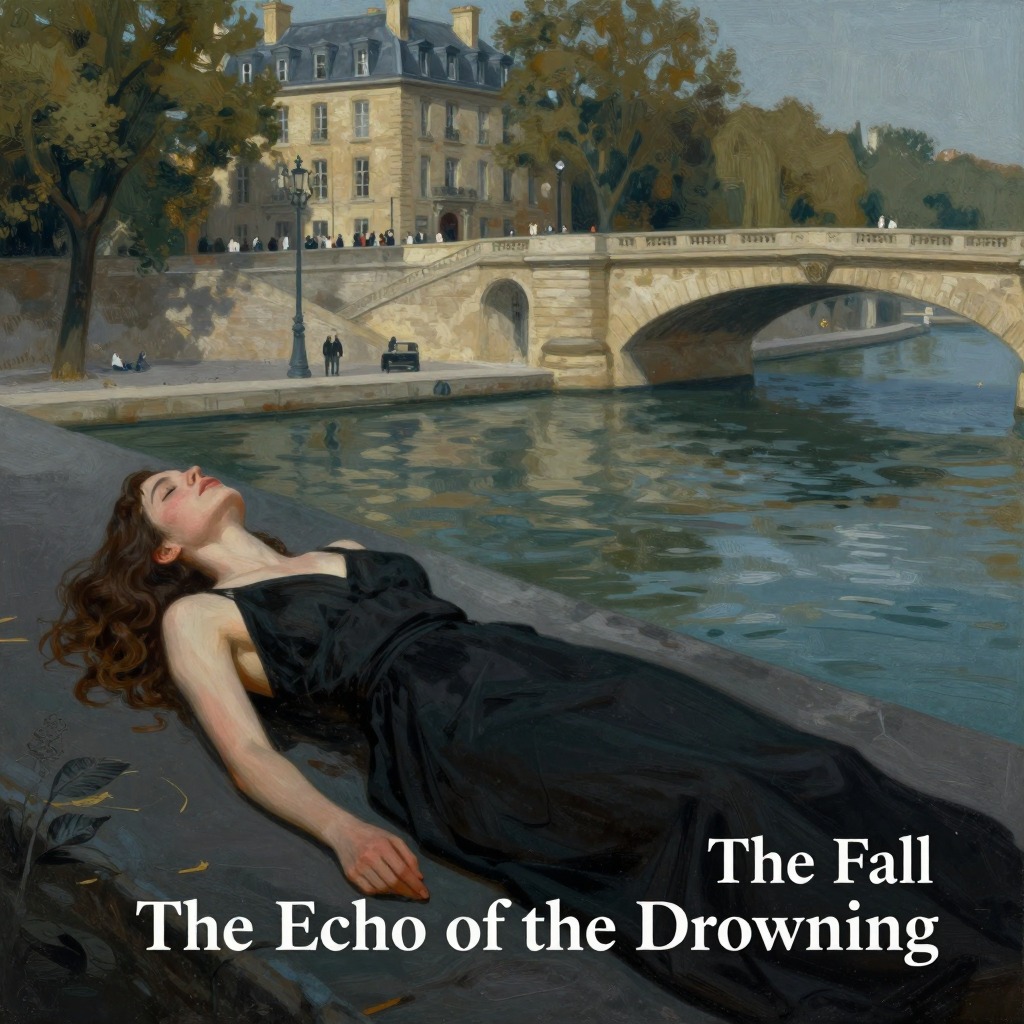
The laugh on the Pont des Arts was not an isolated event but the culmination of a deeper guilt. Two or three years before that evening, Clamence had been returning to the Left Bank by way of the Pont Royal. An hour past midnight, in a fine rain, he passed behind a slim young woman dressed in black, leaning over the railing and staring at the river. The back of her neck, cool and damp between her dark hair and coat collar, stirred him, but he went on after a moment's hesitation. At the end of the bridge, he heard the sound of a body striking the water, then a cry repeated several times going downstream, then silence. He wanted to run and yet didn't stir. He told himself that he had to be quick and felt an irresistible weakness steal over him. He thought, "Too late, too far..." or something of the sort. He stood motionless, listening, then slowly, under the rain, he went away. He informed no one. The next day, and the days following, he didn't read the papers. The laugh on the Pont des Arts, he later realized, was the echo of that cry, which had never ceased, carried by the river to the waters of the Channel, to travel throughout the world, across the limitless expanse of the ocean, and it had waited for him there until the day he encountered it. He realized likewise that it would continue to await him on seas and rivers, everywhere, in short, where lies the bitter water of his baptism.
The Transformation into Judge-Penitent
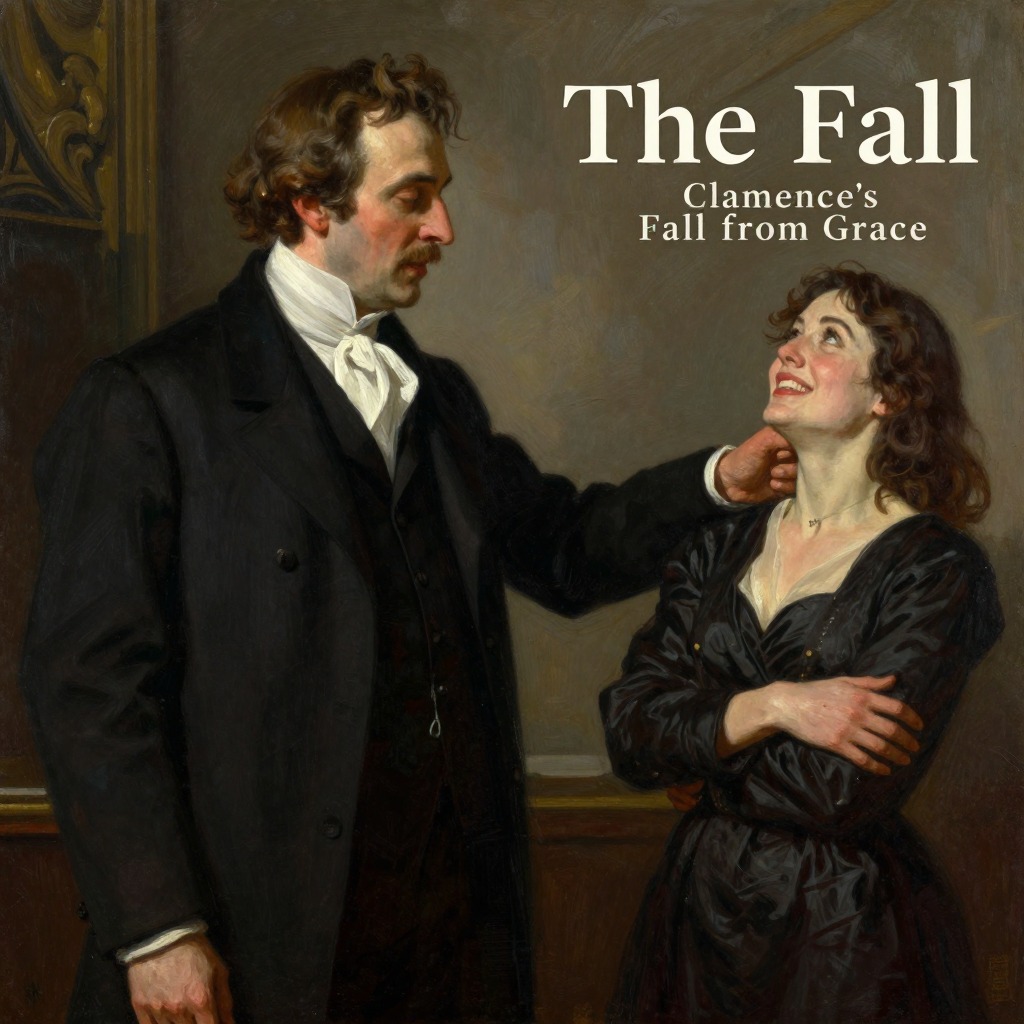
The laugh forced Clamence to confront the fact that he was not the admirable man he had believed himself to be. He had dreamed of being a complete man who managed to make himself respected in his person as well as in his profession—half Cerdan, half de Gaulle. But after being struck in public without reacting during a motorcycle altercation, it was no longer possible for him to cherish that fine picture of himself. He discovered in himself sweet dreams of oppression. He learned that he was on the side of the guilty, the accused, only in exactly so far as their crime caused him no harm. When he was threatened, he became not only a judge in turn but even more: an irascible master who wanted, regardless of all laws, to strike down the offender and get him on his knees. After that, it was very hard to continue seriously believing one had a vocation for justice and was the predestined defender of the widow and orphan. The laugh had revealed that he was not simple; he brought out the fundamental duplicity of the human being. He then devised the profession of judge-penitent, a solution that allows him to accuse himself publicly in order to gain the right to judge others. By confessing his own infamy, he constructs a portrait that is the image of all and of no one, a mask that becomes a mirror for his listeners. He provokes them into judging themselves, relieving himself of that much of the burden. In this way, he silences the laughter and avoids judgment personally, though there is apparently no escape. He has accepted duplicity instead of being upset about it, and has settled into it, finding the comfort he was looking for throughout life. He permits himself everything again, and without the laughter this time. The confession of his crimes allows him to begin again lighter in heart and to taste a double enjoyment, first of his nature and secondly of a charming repentance. He has found a height to which he is the only one to climb and from which he can judge everybody. At long intervals, on a really beautiful night, he occasionally hears a distant laugh and again doubts, but quickly he crushes everything, people and things, under the weight of his own infirmity, and at once he perks up.